
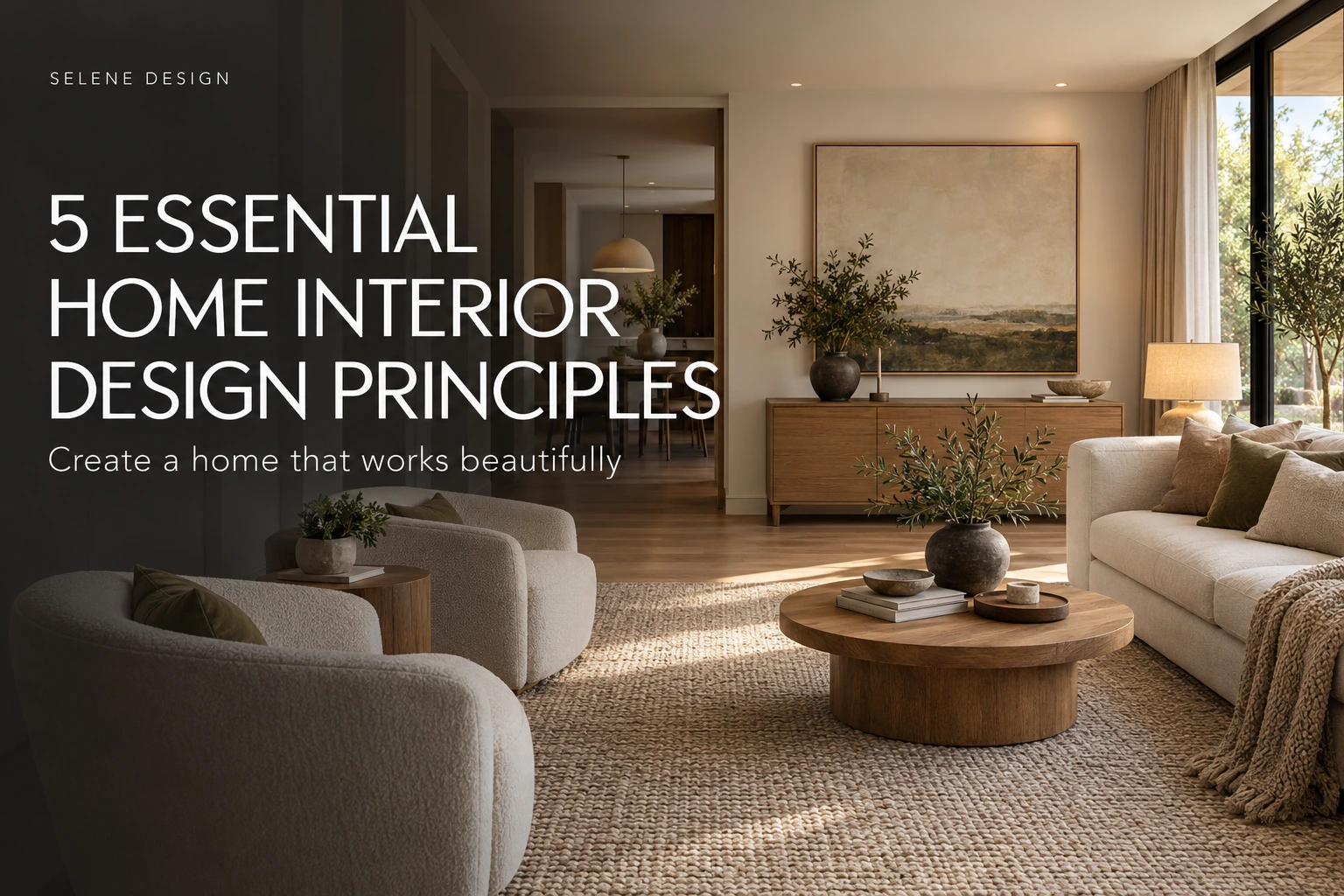
A well-designed home is more than a collection of attractive furniture. It connects space, objects and people. These five principles provide a practical order for making decisions, helping you avoid mismatched purchases and create rooms that support daily life.
1. Plan Around Activities and Movement
Identify who uses the room, what happens there and which activities overlap. Measure doors, windows, columns and furniture accurately. Test opening clearances and circulation so a route to the kitchen does not unnecessarily cross a conversation group or television view.
Include Storage and Flexibility
Storage belongs in the plan. When it is inconvenient, belongings often return to nearby surfaces and circulation routes. Use movable furniture where activities may change, and consider future needs before committing to permanent cabinetry.
2. Establish Balance and Proportion
Choose major furniture first, then relate tables, rugs and artwork to the seating group and room. Dark colors, solid forms and strong patterns can create substantial visual weight even in relatively small pieces.
Create a Clear Focal Point
Symmetry can introduce order, while different objects can balance one another more informally. Choose a main focus, such as artwork or a garden view, and allow other elements to support it. Every wall does not need equal emphasis.
3. Connect Colors and Materials with Use
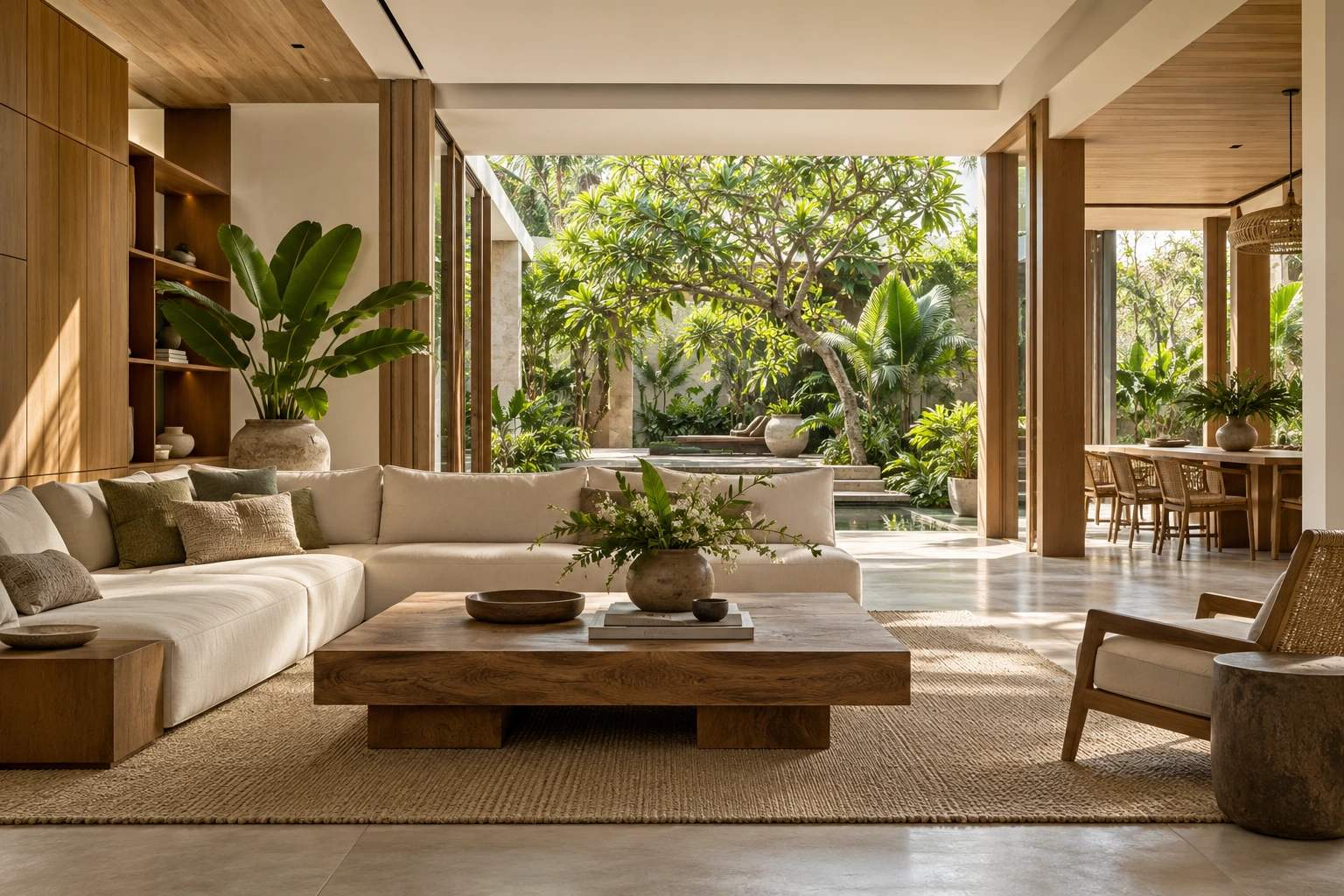
Start with flooring or other finishes that will remain, then develop primary, supporting and accent tones. Texture can add depth without introducing many colors. Review samples together in daylight and artificial light rather than relying only on screen images.
Assess durability, moisture exposure, cleaning and repair alongside appearance. Explore Selene Design’s interior design services when several rooms or finishes need to be coordinated as one project.
4. Match Lighting to Activities and Time
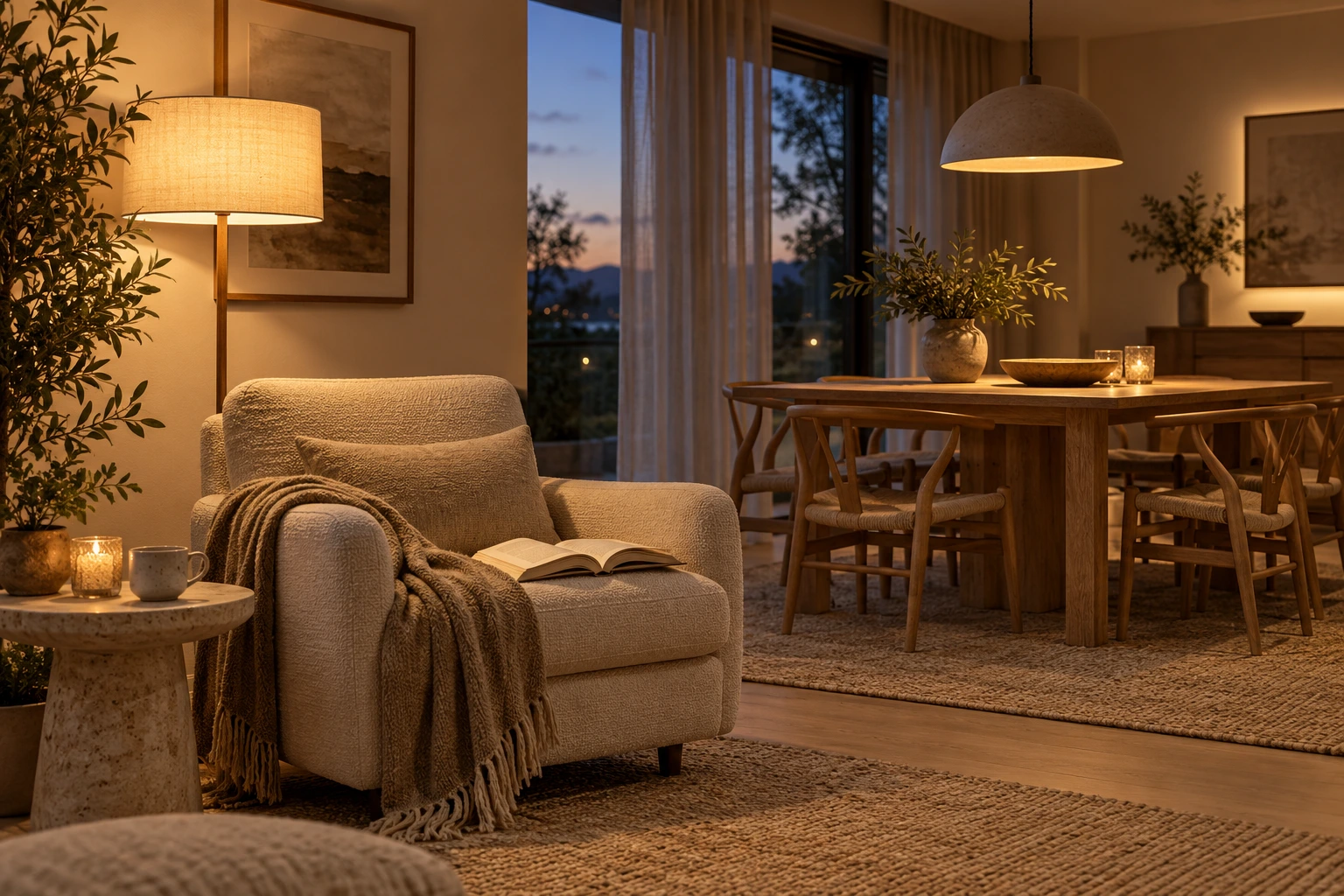
Ambient light supports general movement, task light assists reading or preparation, and accent light adds atmosphere. One central ceiling fixture may brighten a room while leaving shadows across the working surface.
Control Daylight and Separate Circuits
Consider glare on screens, heat and privacy alongside curtains and furniture positions. Separate controls by zone or purpose so lighting can change between work, hosting and relaxation. Confirm equipment compatibility if dimming is required.
5. Choose Furniture for Practical Comfort
Consider who uses each piece and for how long. Try seating and check furniture in its operating position: an extending table needs space when open, and drawers must clear nearby objects. Confirm that larger pieces can pass through entrances, stairs or lifts.
Combine built-ins that solve specific problems with loose furniture that allows change. Preserve cleaning and maintenance access. Additional functions are worthwhile when they simplify a real routine rather than add complicated adjustments.
Apply the Principles Together
In a hypothetical living room with a blocked walkway, oversized table and dark reading corner, begin with the layout. Adjust the table to suit the seating, then add light at the reading position and storage near the objects that accumulate.
These changes work together. Buying more decorative objects would not resolve the underlying problems. Review the room as a connected system rather than approving furniture, materials and lighting independently.
Set Priorities Before Spending
Address systems and permanent elements that are difficult to change before decorative purchases. Establish a budget and compare proposals using the same scope. The interior design and home construction FAQ can help you prepare questions for a project discussion.
Do I Need to Replace Everything?
Often, no. Identify what already works, adjust positions, improve lighting and organize storage before deciding on new purchases. Retaining suitable pieces can protect both budget and personal character.
Plan Your Home with Selene Design
Write down three recurring problems, gather photographs and any available plans, then contact Selene Design to discuss your interior. Connecting layout, proportion, materials, lighting and furniture can create a home that feels personal, comfortable and easier to live in.
……………………………………………………………………
“Selene Design (เซลีน ดีไซน์)”
Define Your Lifestyle. Reflect Your Identity.
Start your design journey with a complimentary consultation.
Explore the details below.
Tel : 064-981-5656
Line Official : @selenedesign
IG : selenedesign.thv
FB : Selene design